Mandira Neogi, Sabiha Sultana, Sharada Keats, Mark Gachagua, Mohammad Monirul Hasan, Ashek Mahfuz, Rudaba Khondker - 16/05/2024
To successfully execute Bangladesh’s National Pathway for the Sustainable, Equitable and Resilient Food Systems Transformation, it is conducive for all actors in the food system to have consistent and easy-to-access data for informed decision-making. To meet this need, the Government of Bangladesh and the Global Alliance for Improved Nutrition (GAIN) in collaboration with the Columbia Climate School, FAO, different ministries including Prime Minister’s Office, Ministry of Planning, Ministry of Agriculture, and other relevant ministries, departments, agencies, development partners, academia, and private sector developed the Bangladesh Food Systems Dashboard (BDFSD) integrating national and subnational level data.
Cathy Green, Christina Nyhus Dhillon, Janice Meerman, Geneviève Stone - 11/04/2023
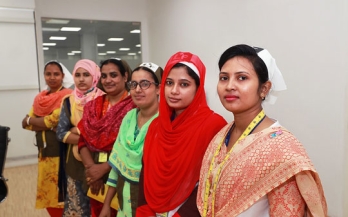
In 2019, in an effort to improve the efficiency and sustainability of its programming, GAIN’s Workforce Nutrition Programme (WFN) shifted away from the traditional project development and evaluation cycle towards a nimbler "Quality Improvement" (QI) approach.
Marijike Hummel, Christina Nyhus Dhillon, Rudaba Khondker, Moniruzzaman Bipul, Sumon G.M., Mandira Neogi - 11/01/2023
As elaborated in a GAIN evidence brief, poor-quality diets and insufficient food quantity are linked to reduced work capacity. This suggests that the malnutrition burden can be partly addressed through a win-win-win approach which improves individual lives, business outcomes, and national economies.
Global Alliance for Improved Nutrition (GAIN) - 15/10/2022
In 2018 GAIN Bangladesh began implementing an adolescent nutrition programme titled ‘Nourishing Dreams’. This was designed in partnership with adolescents themselves, and has at its core making a pledge to eat better and work towards improving availability of healthier food in their surroundings.
Global Alliance for Improved Nutrition (GAIN) - 10/10/2022
GAIN, BRAC, SMC, Renata, a Bangladeshi pharmaceuticals company, icddr,b and the Children’s Investment Fund Foundation (CIFF), set out to evaluate whether such a programme could reach those who are vulnerable, whether they were impactful and whether they were good value for money compared to other routes to improved nutrition outcomes.
Global Alliance for Improved Nutrition (GAIN) - 13/09/2022
GAIN, together with implementing partners along with responsible Brands and Buyers worked collectively with the Government of Bangladesh (GOB)1 to incorporate workforce nutrition programs as a priority.
Global Alliance for Improved Nutrition (GAIN) - 11/07/2022
Micronutrient deficiencies are a public health challenge in Bangladesh. Many children, women, and vulnerable populations are not getting the nutrients they need for proper brain development, immunity, and physical and mental health. Together with diversified diets, large scale food fortification has the potential to make a significant impact on micronutrient deficiency in Bangladesh.
Global Alliance for Improved Nutrition (GAIN) - 11/07/2022
Accelerated digitalization is one of the most significant growth engines for developing nations. With technology driving increased sales and profits globally, a digital quality assurance/quality control (QA/QC) system for food fortification in Bangladesh will open THREE paths to greater efficiency and enhanced financial performance for fortified food producers.
Global Alliance for Improved Nutrition (GAIN) - 11/07/2022
Monitoring the quality of fortified foods has traditionally been a manual, time-consuming process, which relies primarily on sporadic testing once products have reached the market. A partnership of international specialists and experts is working with Bangladesh’s food producers to develop a platform of sensors and software, enabling oversight of the production process and product quality.
Rudaba Khondker, Mandira Neogi, Ashek Mahfuz - 18/03/2022
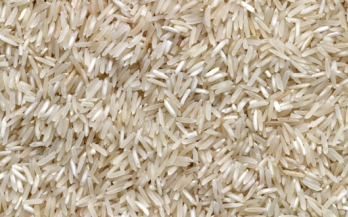
Too many people across Bangladesh are living with zinc deficiency. One proven and effective way to tackle this is through scaling up production and consumption of rice biofortified with zinc.