James P. Wirth, Nicolai Petry, Valerie M. Friesen, Fabian Rohner, Mduduzi N. N. Mbuya - 24/06/2020
Dietary intake data are required to design, monitor, and evaluate nutrition programmes and policies; however, current dietary assessment methods are complex, time consuming, and costly. Recently, GAIN developed a semi-quantitative food frequency questionnaire (SQ-FFQ) that can be used in coverage surveys to estimate the amount of fortified and biofortified foods consumed and their contributions to nutrient intakes.
Global Alliance for Improved Nutrition (GAIN) - 11/06/2020
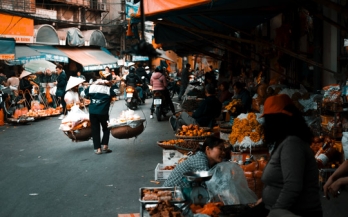
The number of people living in urban environments is growing at a rapid rate. Urban living fundamentally changes how people eat, as they are more reliant on needing paid employment and are more limited with growing their own food. This shift towards more urban living is also seeing big changes in food environments for most people, and what food is available, affordable and accessible to them.
Sharelle Polack - 03/06/2020
Food systems are essential to food and nutrition security. They are also major drivers of economic, environmental, and social development and can be positive forces for urban development. This is critical, as increasing urbanisation of the global population is shifting the relative burden of poverty, food insecurity, and malnutrition to cities. To keep up with this growth, greater urban infrastructure, are required.
Jessica Fanzo, Yusra Ribhi Shawar, Tara Shyam, Shreya Das, Jeremy Shiffman - 26/05/2020
This paper considers whether Public-Private Partnerships (PPPs) focused on improving diets and nutrition can simultaneously advance public health nutrition goals and business goals. Discussion around the efficiency of PPPs is polarised in the field of nutrition.
Global Alliance for Improved Nutrition (GAIN), Scaling Up Nutrition (SUN) Business Network, United Nations World Food Programme (WFP) - 22/05/2020
The COVID-19 pandemic and associated control measures have been having far-reaching effects on societies worldwide, and food systems have not been spared. To better understand these impacts, GAIN and partners, including the Scaling Up Nutrition (SUN) Business Network, undertook a survey of over 350 food system SMEs in 17 countries in early May 2020, aiming to assess the impacts of the COVID-19.
Stella Nordhagen, Ty Beal, Lawrence Haddad - 20/05/2020
Animal-source foods (ASF; meat, poultry, fish, dairy, and eggs) have attracted considerable attention for both their role in diets and their environmental impacts - and their production also plays an important role in livelihoods, particularly in low- and middle-income countries (LMICs).
Global Alliance for Improved Nutrition (GAIN) - 24/10/2019
The Building Business Contributions for the 2020 Global Nutrition Summit conference in The Hague took place as part of Workstream 2 on food systems, which is coordinated by the UK Department for International Development (DFID) and the UN Food and Agriculture Organization (FAO).
Global Alliance for Improved Nutrition (GAIN), New Foresight - 01/05/2020
Nutrition programmes within commodity value chains provide a unique opportunity to improve health outcomes for workers, farmers, their households, and communities. They bring benefits to communities, businesses, governments, and markets. In order for these programmes to be viable in the long term, businesses need to be willing to invest, and the business case for doing so must be understood.
Sharelle Polack, Laura Platenkamp - 19/12/2019
This paper posits the urban food environment as an extremely useful policy-making framework for developing actions to improve nutrition, as it is the point at which people and food interact. It describes the nutritional challenges of urban areas and how urban food environments influence nutrition through the affordability, physical access to, convenience and desirability of healthy foods.
Laura Platenkamp, Sharelle Polack, Mduduzi N. N. Mbuya, Kathrin M. Demmler, Sandra Boatemaa Kushitor, Ana Moragues-Faus, Jane Battersby, Scott Drimie - 27/04/2020
The world is urbanising rapidly, and malnutrition in urban areas (including both undernutrition and overweight/obesity) is an increasing problem. City policymakers in all countries are well placed to address urban malnutrition by virtue of their access to a wide variety of policy-level entry-points to food access and physical activity.