Business for Social Responsibility (BSR), Global Alliance for Improved Nutrition (GAIN), Change Associates, St. John's Medical College - 01/10/2015
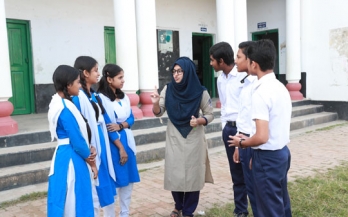
This situation analysis report presents an overview of the current practices in food and day-care-service provision in 15 ready-made garment factories in Bangladesh. It is part of the operational research for the project, "Improving Nutrition of Female Garment Industry Workers and Their Children in Bangladesh.
Global Alliance for Improved Nutrition (GAIN), Dalberg - 01/09/2016
Given the widespread deficiency of zinc in Bangladesh, and the lack of national prevention programs, this study focused specifically on increasing the zinc content of the rice grain. The findings from this report suggest that there is a portfolio of options that can and should be considered as part of an agriculture-nutrition strategy in Bangladesh.
Alison Tumilowicz, Ty Beal, Lynnette M. Neufeld, Edward A. Frongillo - 02/05/2019
In this paper, we used national prevalence estimates among girls and young women 10–22 y of age from the 2014 State of Food Security and Nutrition in Bangladesh report as an example to demonstrate that determining the true prevalence of undernutrition, overweight, and obesity is complicated by racial/ethnic variation across populations in timing of the adolescent growth spurt, growth potential, and body build.
Global Alliance for Improved Nutrition (GAIN) - 14/11/2017
The garment industry has contributed significantly to the economic growth of Bangladesh over the past decades accounting for 82% of the country’s USD 31.2 billion export industry. The garment sector employs directly approximately 4.4 million people, and indirectly 20 million people.
Rahul Rawat, Kuntal K. Saha, Andrew Kennedy, Marie Ruel, Purnima Menon - 01/04/2015
Little is known about how different delivery platforms can be used to reach nutritionally at risk populations with micronutrient powders. This study examined impact, on anemia and iron deficiency, of the sale of micronutrient powders.
Jacky Knowles, Roland Kupka, Sam Dumble, Greg S. Garrett, Chandrakant S. Pandav, Kapil Yadav, Baitun Nahar, Ndeye Khady Toure, Esi Foriwa Amoaful, Jonathan Gorstein - 19/04/2018
Regression analyses of data from stratified, cluster sample, household iodine surveys in Bangladesh, India, Ghana and Senegal were conducted to identify factors associated with household access to adequately iodised salt.
Rebecca Spohrer, Greg S. Garrett, Arnold Timmer, Rajan Sankar, Basanta Kar, Faiz Rasool, Lorenzo Locatelli-Rossi - 15/12/2012
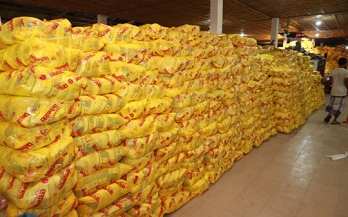
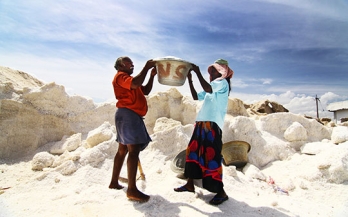
The aim of this study was to review experience of the use of iodized salt in the food industry globally, and analyze the market context in Bangladesh and Pakistan to test whether this experience may be applicable to inform improved national universal salt iodization programming in developing countries.
Jacky Knowles, Greg S. Garrett, Jonathan Gorstein, Roland Kupka, Ruth Situma, Kapil Yadav, Rizwan Yusufali, Chandrakant S. Pandav, Grant J. Aaron, Universal Salt Iodization Coverage Survey Team - 12/04/2017
Household coverage with iodized salt was assessed in 10 countries that implemented Universal Salt Iodization.
Marti J. van Liere, Dessie Tarlton, Ravi Menon, M. Yellamanda, Ietje Reerink - 05/12/2016
This commentary aims to discuss the multiple ways in which private sector can leverage its expertise to improve nutrition in general, and complementary feeding in particular.
Mohammad J. Raihan, Fahmida D. Farzana, Sabiha Sultana, Kuntal K. Saha, Md Ahshanul Haque, Ahmed S. Rahman, Zeba Mahmud, Robert E. Black, Nuzhat Choudhury, Tahmeed Ahmed - 08/06/2018
Rice production is invariably related to food insecurity which translates to the food shortage or lean periods. The objective of this study was to compare the effect of two major rice harvest seasons and the post‐aus rice harvest period on household food insecurity along with the contribution of relevant household characteristics.